The story

Coming home — but home is no longer there

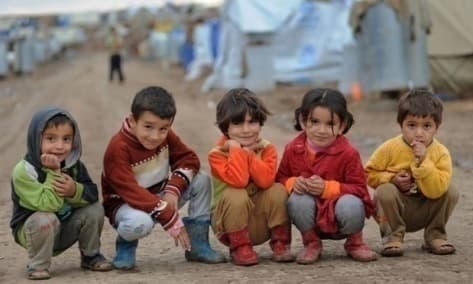
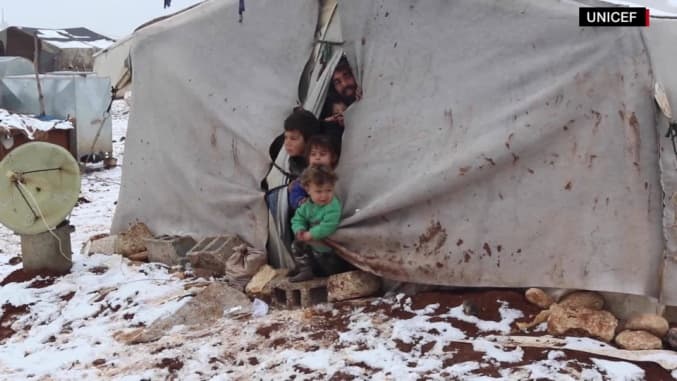
Bashar al-Assad is gone, there is hope again. People are leaving the camps where they lived in tents through terrible years. But home is no longer there, their village is gone, trees have been cut down... what now?

Together with the Molham Foundation (Molham Volunteering Team), Mattar will build an entirely new village. The plans are ready. Molham is a volunteer organization consisting of students and young professionals who carry out relief and reconstruction projects together with the residents.

We have great confidence in Molham. Naturally, this involves a lot of self-reliance, because Mattar helps people help themselves.

Ma’aratsien

Summary

Helping people help themselves

Stichting Mattar helped displaced people in Northwest Syria help themselves. Mattar does not provide emergency aid: life in the displacement camps was one long emergency, and now that people have returned to their hometowns, nothing has changed in that respect. Before the fall of the Assad regime, Mattar organized employment projects through which people could earn money to support their families.

Since the fall of the Assad regime, Syrian refugees and displaced people have been returning to their homes, villages, towns and streets. But the country lies in ruins, and so do their homes. Stichting Mattar wants to help these people rebuild their lives. Together with our partner Molham, Stichting Mattar wants to rebuild a village that was completely destroyed by bombing in 2019. Because much of the work will be done by the residents themselves, we remain true to our motto: helping people help themselves.

The project covers 170 homes and a school. The total project cost is $1,294,488.35. Within one year the village will be rebuilt, people will once again have a real roof over their heads, and the children will be able to go back to a school with a real roof, chairs, tables and teaching materials.

170 homes

Reconstruction of homes

1 school

Reconstruction of the school

$1,294,488.35

Total project cost

1 year

Indicative implementation period

Organizational background

Mission

Mattar’s mission is helping people help themselves. Until 8 December 2024, Mattar did this through employment projects for poor displaced camp residents in Northwest Syria. Through these employment projects, they earned money to support their families.

After 8 December 2024, Mattar wants to carry this mission forward by helping poor Syrians get back on their feet after fifty years of oppression. We focus exclusively on people who spent years in displacement camps in northern Syria. Now they want to return home, to their village, to their town. For many, there is no home left. Their houses have been bombed to rubble.

Mattar wants to rebuild one such shelled village through three sub-projects: the reconstruction of 170 homes, the reconstruction of the school, and an environmental project. The land around the village is bare; all the trees have been cut down, so it is turning into desert. Because before the war people lived from arable farming and from fruit and olive growing, it is important to stop this desertification. The environmental project is not included in this project plan and will be written up separately.
Mattar and its partners

Together with Molham

For this project, Mattar has found an expert partner in Syria: the Molham Volunteering Team. Molham has carried out several projects rebuilding villages and schools and has a strong international reputation with major funders. After the earthquake in Turkey, Molham also received funding from Dutch NGOs for the repair and reconstruction of homes.

Our employment project in one of the displacement camps, The Farm, was supported in the Netherlands by the Haella Foundation and the Pharus Foundation (www.stichtingpharus.nl).

The problem

The situation is dire

After 8 December 2024, everything changed. Bashar al-Assad’s regime was driven out. People had hope again. Slowly but surely, people began leaving the displacement camps in northern Syria. The coordinator of our project The Farm also wanted to return to his village, Ma’aratsien. He knew that almost nothing was left of it. He went anyway.

The situation is dire. The board of Mattar asked Molham to visit the site and assess the condition of the village.

Molham concluded:

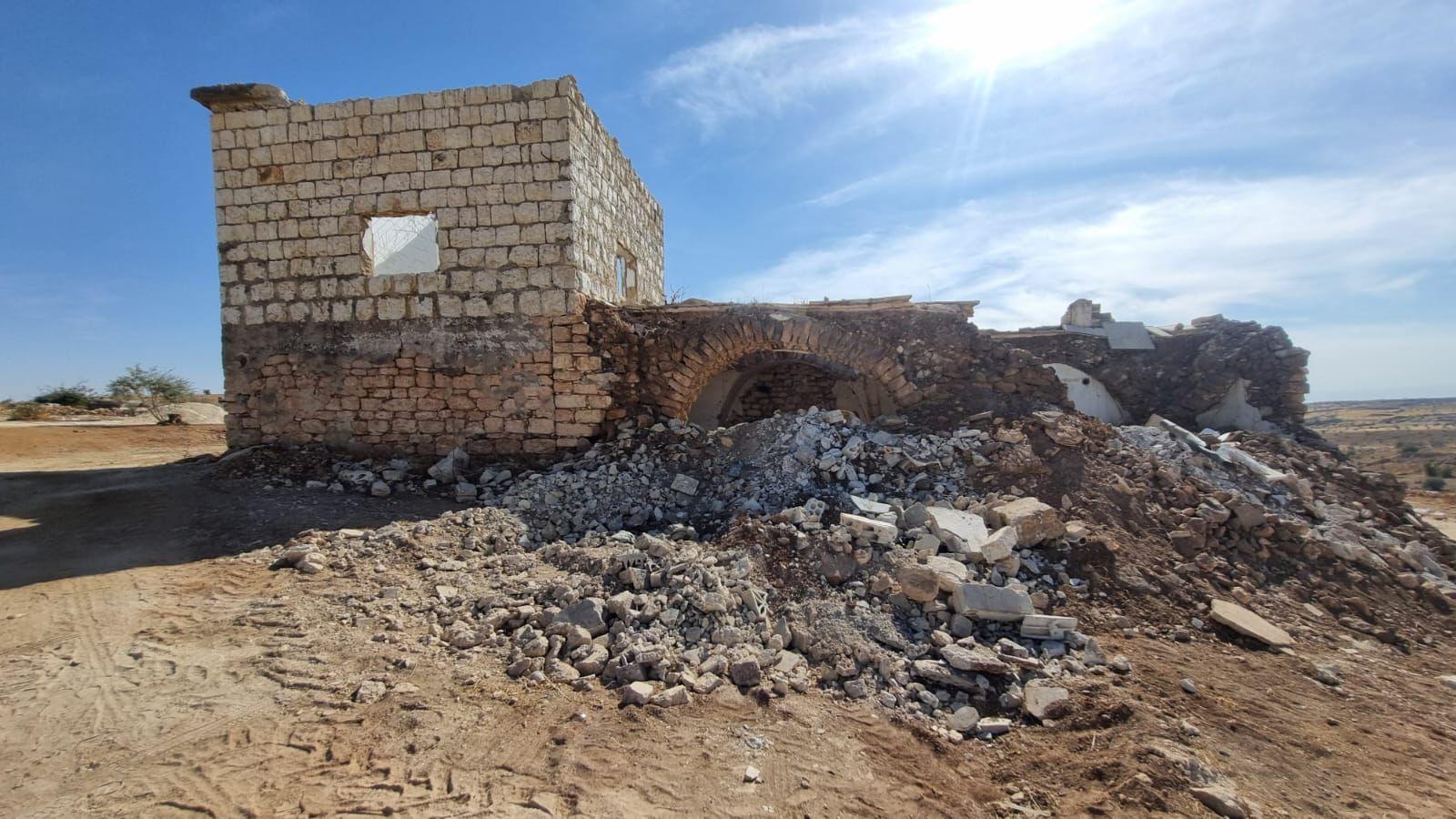
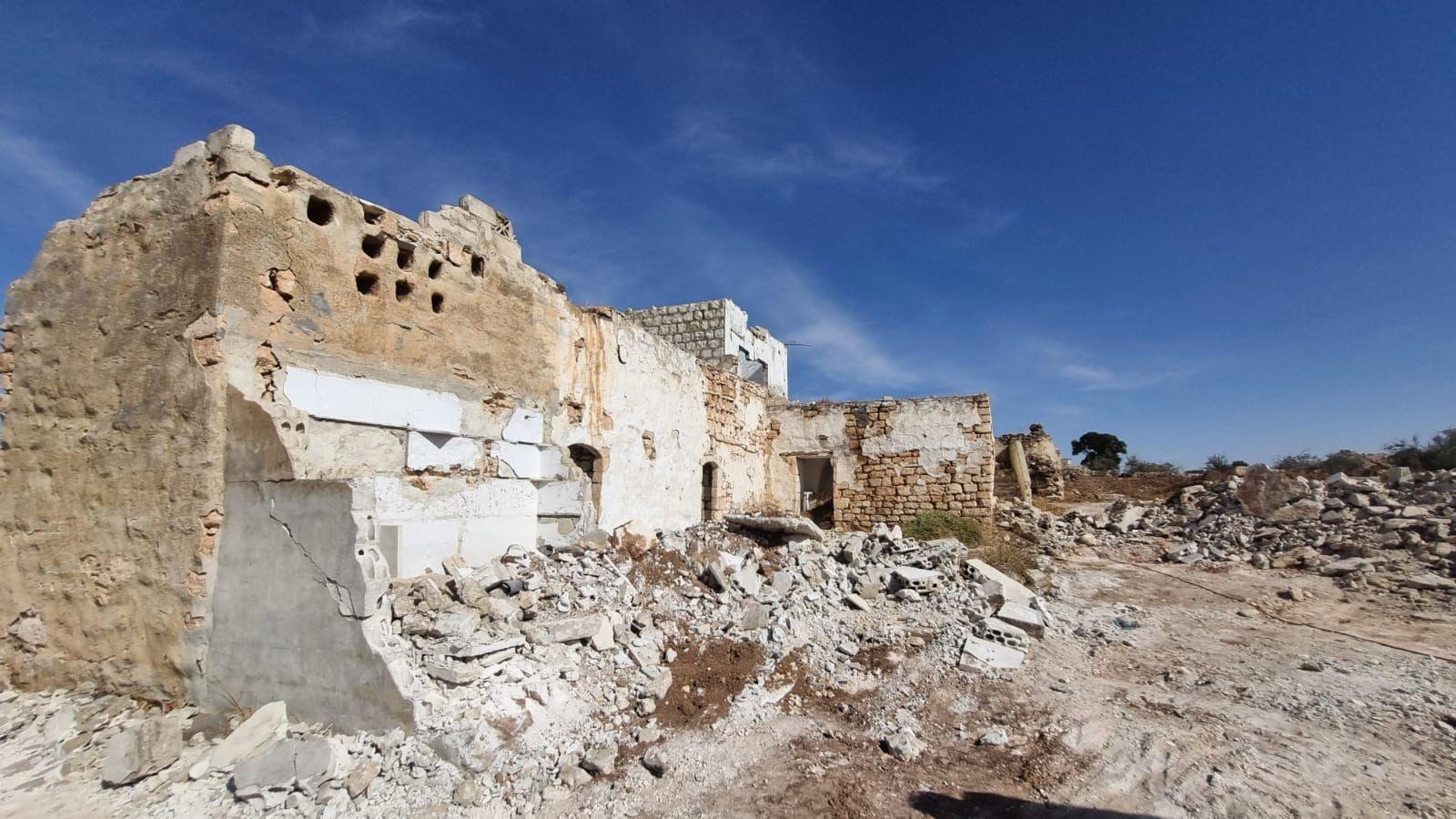
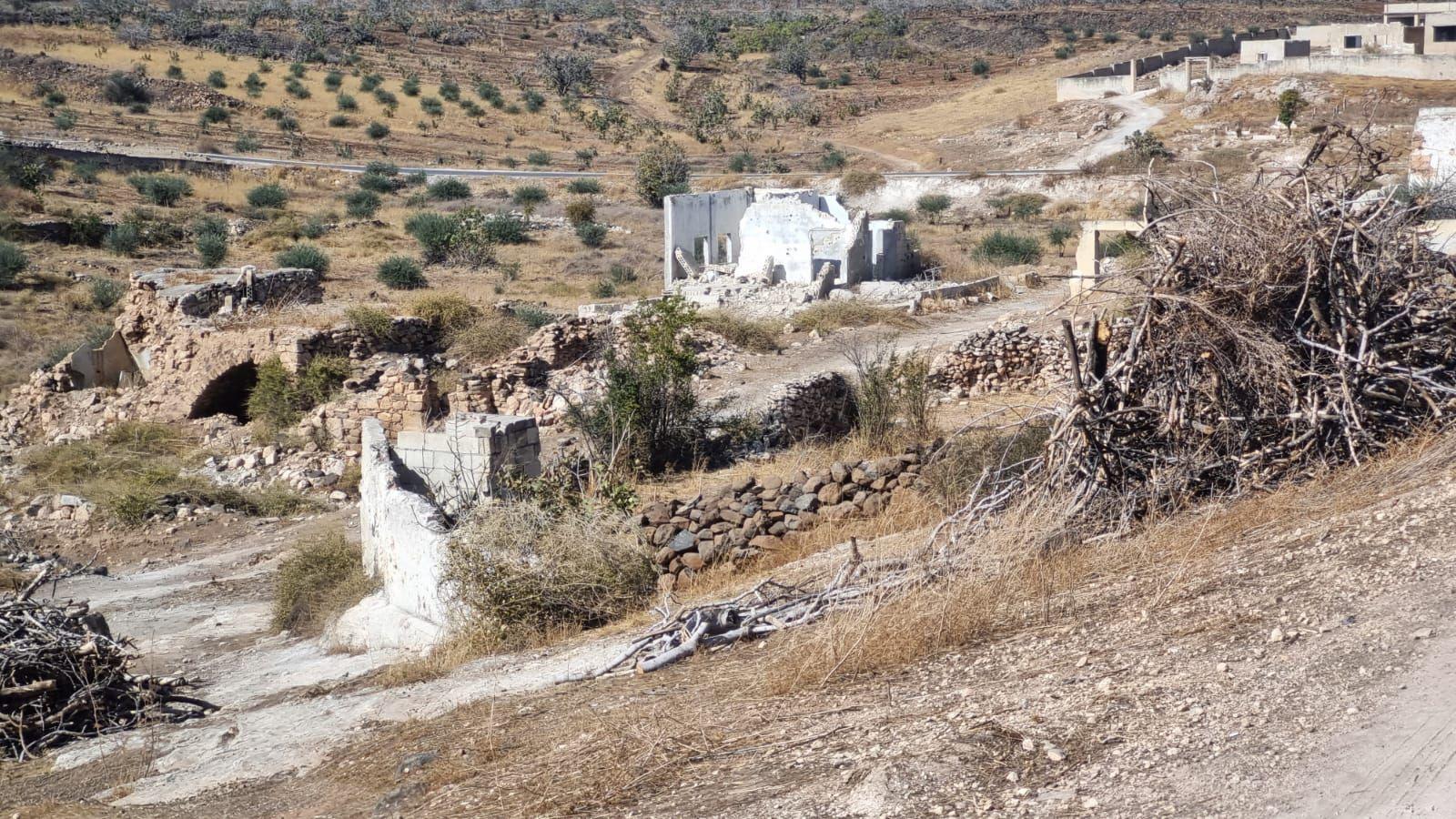
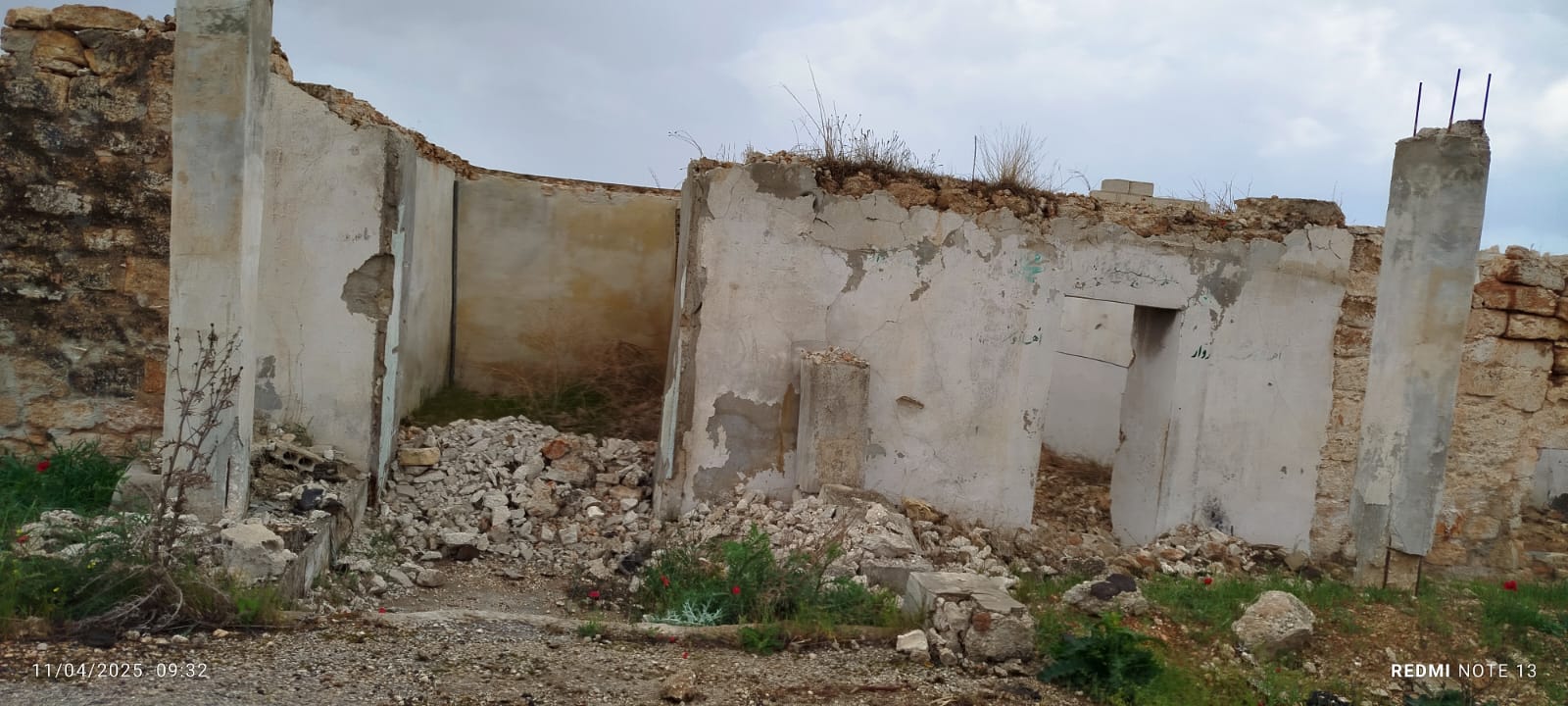
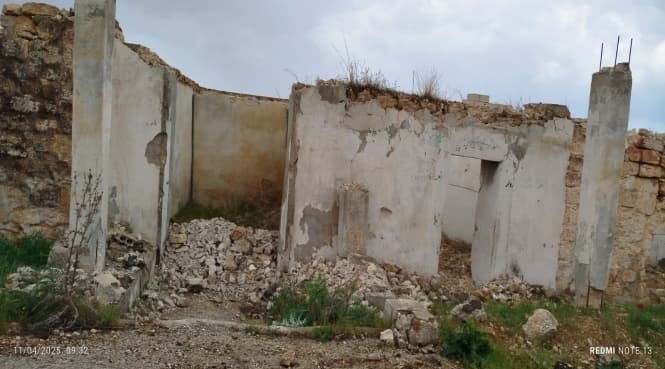
  1. that all homes but one have been wholly or partly destroyed;
  2. that there is no water or electricity supply;
  3. that the roads need to be repaired;
  4. that the school needs to be rebuilt;
  5. that the mosque needs to be rebuilt;
  6. that there is no healthcare of any kind;
  7. that the source of income, the fruit and olive trees, has been cut down;
  8. that the residents urgently need financial support.

Molham stated that the situation for the returning residents was bad.

The Syrian government is dealing with a shattered country weighed down by sanctions, a lack of money for healthcare and education, and government administrations that do not (or no longer) function. The interim government’s priority is lifting sanctions and getting a collapsed economy back on its feet.

The government would prefer to see the tent camps in northern Syria closed and people returning home. However, there is no money to restore housing on the outskirts of cities.

Our project does, however, require government participation. That is why Molham wants to start by building 170 homes. From experience, Molham is convinced that the local authorities in Idlib will then also do their part by restoring roads and electricity.

Situation in the village, photo 1
Situation in the village, photo 2
Situation in the village, photo 3

Who we do it for

Primary target group

The primary target group is the village’s former residents. Some of them may not return. In that case, our secondary target group is people from one of the tent camps for displaced people in northern Syria.

Involvement

Mattar’s mission is helping people help themselves, so everyone who is able to will take part in the work themselves. All activities will, however, take place under the watchful eye of Molham’s professionals.

Our former coordinator of The Farm is one of the former residents. During the works, he will be the direct point of contact for residents and act as an intermediary between the community and Molham. He will also be tasked with organizing residents’ meetings. These meetings will be held as often as necessary or desirable and are intended to let the residents and Molham discuss the works with each other.

Goal

Outcomes

The construction of 170 homes in 3 categories.

Seventy completely destroyed homes

70 Ɨ $8,000 = $560,000

Ninety heavily damaged

90 Ɨ $5,000 = $450,000

Ten with limited damage

10 Ɨ $2,500 = $25,000

Total

$1,035,000 excl. materials and overhead

Rebuilding the school

See the annex for the specification.

  • •A separate project proposal and budget will be drawn up for the environmental project
  • •The board of Stichting Mattar has decided not to include the reconstruction of the mosque in the project.

Measuring

The board of Stichting Mattar meets with Molham every month to discuss progress.

The project’s progress will be discussed with the funder at a frequency still to be agreed, for example once a quarter, and more often if necessary or desirable.

If financial problems or delays arise, a solution will be sought together with Molham, and this will be communicated to the funder immediately.

Feasibility

The planning and timeline serve as the basis for a feasible and realistic project during implementation, and they are decisive.

Timeline

Molham’s detailed project proposal in the annex includes a planning and timeline. It is indicative. The project can only start once sufficient grant funding is available. The timeline and planning will then be adjusted.

The detailed project description can be found in the annex.

Monitoring and evaluation

Our KPIs

Financial

The budget is realistic and therefore the standard. We consider budget overruns a problem that must be discussed, whose causes must be investigated and reported, and for which solutions must be proposed.

Goal

The goal (170 homes and a school) will be achieved within the given planning. If the works are delayed, Mattar will report this to the funder immediately and consult with Molham. The board of Mattar will analyse the delay and seek and propose solutions to the funder.

Data collection

Through our monthly consultations with Molham, we collect data on finances, planning and resident participation. In addition, we have our own ā€˜supervisor’ for the implementation, paid directly by Mattar. He will monitor the planning and act as the intermediary between residents and Molham. Where necessary, he will raise any problems that arise with the board of Mattar, unprompted.

Reporting frequency

Monthly meetings between Molham and the board, including our coordinator.

Quarterly reporting to the funder, unless otherwise requested.

Risks

  • •Political instability in Syria in general, and in the Idlib region, where the village of Ma’aratsien is located, in particular.
  • •Shortage of building materials on the market.
  • •Rising prices of building materials.
  • •Supply problems.

Molham has carried out construction projects before and has experience with these risks. In addition, we believe that any risks should in the first instance be absorbed within the budget. If that is not possible, Molham must bring the problems to the board of Mattar immediately.

Opportunity

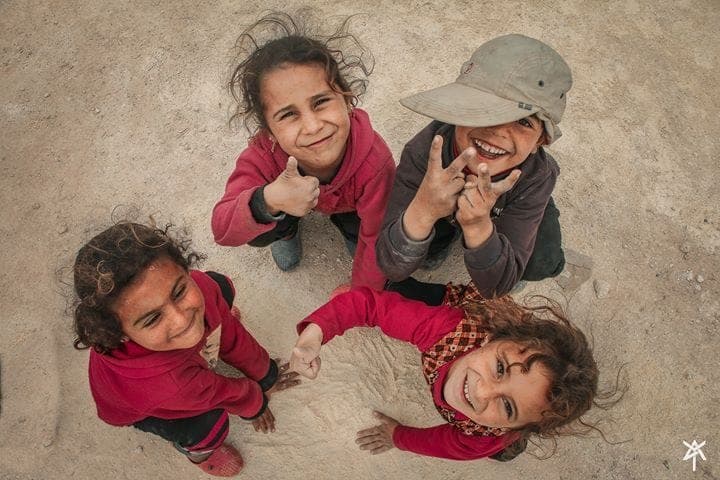
The great need among the population makes participation very likely. People are waiting for help.

Once people have decent housing again, one major worry is lifted. The villagers can then focus on other things again, such as work, health and education. At the moment, many villagers are once again living in a tent next to the ruins of their home. Right now (January 2026), it is -10 degrees Celsius in the village.

Opportunity for children

Budget

Budget for The Village project

The total budget required is $1,258,530.35. This includes Molham’s additional and overhead costs. Stichting Mattar charges 3% in costs ($37,755.91). Among other things, this covers campaign and communication costs, bank and exchange-rate costs, and our resident coordinator. The board consists of a small group of professionals. Even so, the board believes it needs to scale up in quality. The board will be expanded with a communications adviser and a campaign adviser. The board of Stichting Mattar is currently working on professionalizing our website.

This brings the total project cost to $1,294,488.35.

The budget is shown below. Specifications are attached as an annex.

Expenditure

  • Contractual output (school and 170 homes) $1,097,867.33
  • Subtotal $1,097,867.33
  • Staff and other personnel costs $86,280
  • Supplies, materials $7,663
  • Tools, transport $550
  • General costs $6,240
  • Subtotal $100,733
  • Project costs $1,198,600.33
  • Molham overhead 5% $59,930.02
  • Mattar overhead 3% $35,958
  • Subtotal $95,888.02
  • Total project costs $1,294,488.35

Income

  • Private donations $10,000
  • Pharus grant for The School $5,895
  • Reserved donation $294
  • Grant funding required $1,278,299.35
  • Total income $1,294,488.35
Thank you for your attention

Thank you for your attention

Helping people help themselves